


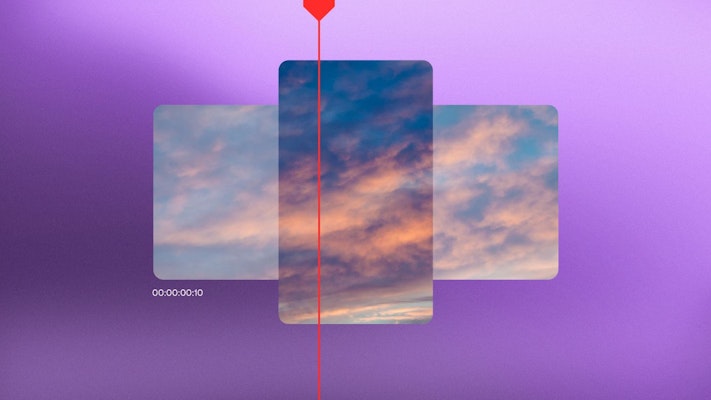
We all love a good timelapse, but shooting one is only part of the process. Now that you have your sequence of still images, you need a way to finish your timelapse and turn it into a video you can use. You can easily create a DaVinci Resolve timelapse from photos or video, and today, Motion Array will walk you through creating this stunning effect simply and effectively.
Summary
Part 1: Preparation to create a DaVinci Resolve timelapse from photos
Before you make a DaVinci Resolve timelapse with still images, you must prepare them. How much you need to do depends on how they were shot. You don’t need to do anything if you shoot your images as JPEGs (.jpg) and your camera names the files as a numbered sequence. Save the files to a single folder on your hard disk and skip to Part 2. If you’re keen to learn how to create a DaVinci Resolve timelapse, but don’t have a specific project in mind, you can grab stock images from Motion Array to play with for this tutorial.
If you take your photos as RAW files, you’ll need to process the sequence in software like Adobe Lightroom first and then export it as a JPEG or PNG image sequence. It’s very important to make sure the images are correctly ordered and in a numbered sequence (e.g., Photo-1, Photo-2, Photo-3, etc.), otherwise DaVinci Resolve won’t recognize the photos as a timelapse.
When processing your images, don’t resize or crop them. You can use the higher resolution in DaVinci Resolve to reframe and animate your timelapse, and this also helps if you need to stabilize the footage due to camera shake.
Part 2: Easily create a timelapse in DaVinci Resolve
Now that you have your image sequence saved in a folder on your hard disk, it’s time to import and use it in DaVinci Resolve. This may be in a new or existing project. Let’s start with a new project and work through setting it up first.
Step 1: Project settings
Before you import any files, it’s essential to complete some steps. You can access the ProjectSettings by clicking the Settings cog at the bottom right in any tab. Motion Array suggests starting in the Media tab, where you’ll import your sequence of images. Now set the following:
Timeline resolution
HD (1920 x 1080) and UHD (3840 x 2160) are both popular resolutions. If you want to create a vertical video (e.g., for an Instagram story), you can use a custom setting such as 1080 x 1920 to achieve vertical HD video.
Frame rate (frames per second)
You need to set the frame rate to match the intended frame rate you shot your timelapse in (e.g., 240 photos at 24 fps will play for 10 seconds). This is the frame rate or speed at which your timelapse will play back. You need to set your frame rate before importing your timelapse because this is the frame rate DaVinci Resolve will assign to the clip. If you change it after import, you’ll need to set the correct frame rate under Clip Attributes later.
The same goes for making a DaVinci Resolve timelapse from a video. Setting your frame rate too high (e.g., 60 fps) while you shoot your timelapse for 30 fps will play back at twice the intended speed. If you have an existing project, your timelapse will play back at the project frame rate, so shooting to match your project is always best practice.
Image scaling
Under Input Scaling, select Scale full frame with crop because most cameras take photos at a 3:2 or 4:3 aspect ratio. This setting will fill your 16:9 video frame with the photo and crop the edges so there’s no black frame. It’s easy to adjust later, so it’s not a problem if you miss this setting.
Great, your project is set up. Now let’s jump in and create that DaVinci Resolve timelapse from your photos.
Step 2: Importing your timelapse image sequence
- In the Media tab, navigate to the folder with your image sequence.
- You’ll see a single clip in the folder. This is because DaVinci Resolve automatically recognizes your sequence as a video clip.
- Drag the clip into your project to import it, then go to the Edit tab.
- In the Edit tab, drag the clip onto your timeline, set it to loop, and play it back.
- You now have a timelapse that you can export as a video on the delivery page in any format you need.
Part 3: Create an animated vertical timelapse in DaVinci Resolve for social media
Let’s move on to a more advanced example: You want to create an Instagram video. These are typically vertical videos, so it’s best to shoot for vertical video if you plan to use it. However, you can apply a template for vertical video if you need to.
Now, let’s turn that into a DaVinci Resolve timelapse from your video or photos:
- In your Project Settings, set your resolution to 1080 × 1920 and your frame rate to match your intended timelapse playback rate, and make sure the Scale full frame with crop is selected under image scaling.
- Follow the steps above to import and add your timelapse sequence to your timeline. You now have a vertical timelapse.
- The problem is that the framing of your timelapse is likely to be off due to the vertical frame.
- Select your clip in the timeline and go to the Inspector.
- Move to the start of your clip. In the Inspector, click the small diamond next to Zoom and Position. This will set keyframes that will let you animate these functions.
- Adjust the Zoom and Position of your clip to the way you’d like it at the start.
- Now move to the end of your clip. Create keyframes again by clicking the diamonds next to Zoom and Position and adjusting these to where you want your clip to end.
Once you’ve created your timelapse, you can also level it up with cool DaVinci Resolve effects.
Part 4: Tips for using timelapse in DaVinci Resolve
Always stabilize your footage
Even when shooting on a tripod, small movements such as wind or bumping the tripod can easily creep into your timelapse. DaVinci Resolve can often save the day if you use the Stabilization function. It can be accessed in the Inspector window when you click on the clip, or in the Color tab. Do your stabilization before you attempt any animations and use the Camera Lock function for a fixed timelapse, but leave it off for a motion timelapse.
Create motion blur
Ideally, this is achieved in the camera by using an ND (neutral density) filter to slow the shutter speed enough to blur movement in the frame. This creates a smooth timelapse that often stutters with fast shutter speeds that freeze the motion. In DaVinci Resolve Studio (the paid version), you can also add Motion Blur in the Color tab.
Use optimized media or proxies
High-resolution timelapses can be very tough on your computer, so using optimized media or proxies that are lower resolution and have an easy-to-edit format can make it much simpler to complete larger projects. If you combine this with a render cache, you can achieve smooth playback even on a lower-end computer system.
Import photos frame by frame
Sometimes you may need to import a timelapse as separate single frames, especially if you don’t have a numerical sequence.
- In the Media Page, select Show Individual Frames from the menu under the 3 dots (…). This will show each photo as a separate file instead of an individual clip.
- Now select all the files and drag them into the media pool.
- In the File menu under Preferences > User > Editing, change the Standard Still Duration to 1 frame.
- Ensure your files are sorted in the right order. Select all the files and drag them into your timeline. You’ll have a timelapse made up of individual photos. You can easily manipulate and edit individual frames as needed.
When you’re done, make a compound clip with all the frames to simplify the rest of the editing process.
DaVinci Resolve is a great solution for creating a timelapse for video projects or social media posts. With a bit of preparation, creating a simple timelapse is a matter of drag-and-drop. If you’d like to get to grips with what DaVinci Resolve can do, Motion Array has a handy beginner’s tutorial you can check out.
It doesn’t end there: DaVinci Resolve is a fully featured NLE and color grading solution with powerful editing capabilities, stabilization, motion blur, VFX, audio mixing, and more to make the best of the stunning timelapse you just created. To learn more about other speed effects, check out this useful tutorial on slow motion in DaVinci Resolve.


